This is default featured slide 1 title

Go to Blogger edit html and find these sentences.Now replace these sentences with your own descriptions.This theme is Bloggerized by Lasantha Bandara - Premiumbloggertemplates.com.

This is default featured slide 2 title

Go to Blogger edit html and find these sentences.Now replace these sentences with your own descriptions.This theme is Bloggerized by Lasantha Bandara - Premiumbloggertemplates.com.

This is default featured slide 3 title

Go to Blogger edit html and find these sentences.Now replace these sentences with your own descriptions.This theme is Bloggerized by Lasantha Bandara - Premiumbloggertemplates.com.

This is default featured slide 4 title

Go to Blogger edit html and find these sentences.Now replace these sentences with your own descriptions.This theme is Bloggerized by Lasantha Bandara - Premiumbloggertemplates.com.

This is default featured slide 5 title

Go to Blogger edit html and find these sentences.Now replace these sentences with your own descriptions.This theme is Bloggerized by Lasantha Bandara - Premiumbloggertemplates.com.

Wednesday, January 9, 2019

In Morocco, Exploring Remnants of Jewish History


במרוקו, חקר שרידי ההיסטוריה היהודית


Inside the mellah, wares echo those once sold by its former inhabitants.
CreditCredit

Boy 1: “What are those two guys doing walking around here?”
Boy 2: “It’s obvious. They’re looking for the Jews.”
This exchange was translated from Arabic by Youness Abeddour, a guide and documentarian who agreed to share with me his knowledge of the mellah, the walled Jewish quarter, of Fez. Boy 2, though, was mistaken. Although as many as 240,000 Jews lived in Morocco as recently as the 1940s, only around 3,000 remain in the country today. Youness and I had not come to look for the Jews; we had come to look for the traces they left behind.
These traces, whether in buildings or objects, or less tangibly in music and stories and memory, were ubiquitous if sometimes elusive in the mellahs of Fez and, as I discovered later, Marrakesh. Some were easily found, others less so; but running like an electrical charge through this rich but disappearing heritage was a palpable sense of urgency about what will happen in the coming years to Morocco’s Jewish legacy.It was a sparkling morning last fall as I approached the mellah, a 20-minute walk from Fez’s medina, with its vivid theater of hucksterism, artisanship and transport-by-mule. The mellah felt downright slumberous by comparison — and comparison is in a way the point, since geography is so central to this dramatic story of a place and its people: Until I stood at the gate to the mellah, I did not quite grasp the significance of the Sultan’s decision to relocate the Jews within waving distance of his own back door.
Synagogue Lazama in the Marrakesh mellah.
Credit
                                                                                       
The year was 1438, and this move marked a momentous shift in Moroccan Jewish life. Oral tradition places the Jews in Morocco since just after the destruction of the first temple in Jerusalem in the sixth century B.C. Under Arab rule the climate was for long periods (but not without exception) characterized by a general spirit of tolerance, first formulated in the seventh century, when Jews became known as dhimmi, or “protected persons.” They were free to practice their religion, but they were also required to pay a special poll tax, and they were barred from certain occupations. At times they were allowed to live in the city; at others not. Long stretches of tranquillity were interrupted by sporadic outbreaks of violence.
It was after one particularly extreme attack that the Sultan moved the city’s Jews to a walled neighborhood near his palace on what had once been a salt marsh, or mellah. Mellahs soon appeared in Marrakesh, Rabat, Salé and elsewhere. But whereas European ghettos were established out of a punitive impulse, the Moroccan mellah was — ostensibly — intended to safeguard.
Today the mellah in Fez still feels distinct from the city’s other precincts. The buildings are multistoried, since the limited acreage developed vertically to accommodate a growing population. They are also pierced with windows and fitted with festive balconies, while in the medina most turn a blank facade to the street, in support of the Muslim policy of keeping women concealed.
“Muslims used to come to the mellah to party,” Youness said as we made our way along its market street. “They could drink alcohol and look at unveiled women. Sometimes,” he added with a raised eyebrow, “more than just look.”
Not, presumably, at our first stop, the Danan Synagogue. Named for a rabbinical family that goes back 50 generations, the 17th-century synagogue underwent a major restoration in 1998 under the guidance of Simon Levy, a historian. Congregants at the Danan were megorashim, Jews expelled from Spain, and had a different language, liturgy and place of worship from the toshabim, the Jews who had lived in Morocco before their arrival.
Nothing like a little intramural rivalry to spur synagogue building. Coming along so soon after the establishment of the mellah, the 1492 exodus had an enriching — but for the toshabim also disconcerting — effect on Moroccan life. Sephardic Jews worked as scholars, writers, printers and artisans whose metalwork transformed the local culture. At the Danan there is ample evidence of their abiding flair in the intricate zellij tile work and dashing green carved wooden trim on the bema, the raised platform from which the Torah was read; downstairs a mikvah, or ritual bath, and communal oven attest to the multiple uses the building was once put to.
I found it very moving to stand with Youness in this empty synagogue and afterward in the nearby Slat Al Fassiyine, an equally exquisite 17th-century synagogue named and created for the residents of Fez, rather than the newcomers. Separate synagogues for rivalrous Jews, built close to the same time and within a few blocks of each other? How poignant, even pointless, all this seems now, with nearly everyone gone.
The recent history of Slat Al Fassiyine — a carpet workshop and boxing gym until its meticulous restoration in 2010 and 2011 — in a way encapsulates the tricky present moment in Morocco’s relationship with its Jewish heritage. For if Jews trickled into Morocco during the ancient period and poured in after the Spanish Inquisition, they poured out of the country in a series of hiccupping waves in the middle of the 20th century (the founding of Israel, the end of the French protectorate, the Six-Day and Yom Kippur Wars) that cumulatively convinced the vast majority of Moroccan Jews that their beloved country, which sided with its Arab cousins in times of conflict, fell on the unsafe side of unpredictable.A dramatic change in such a brief span of time raises many questions. How is so much shared history to be told when so few people are on hand to tell it? How should the abandoned and decaying yet significant urban fabric be preserved, and by whom?I felt the complexity of these dilemmas everywhere I went in Fez. I felt them in the comments of the boys in the mellah streets. I felt them in the Jewish cemetery, whose graves, only recently fully cataloged, spread over a large sloping plot where notable rabbis are set off in a separate section and prolific offerings (including olives and fruit) are left for Sol Hachuel, a Jewish female saint whom both Jews and Muslims venerate for her defiance of forced conversion, one of several examples of such shared worship that is specific to Morocco.And I felt it especially in the most particular museum created by Edmond Gabbay in the former school that adjoins the cemetery in Fez. Stepping into Mr. Gabbay’s museum was like entering a three-dimensional story by Jorge Luis Borges. One of the remaining Jews of Fez (under 100, all living in the new city), Mr. Gabbay, 81, has made it his mission to collect and display the goods and chattels the Jews left behind: the passports and report cards; the eye charts; the baskets spilling over with prayer shawls; the stuffed animals; the hats and clothes; the mixing bowls and soccer balls; and the books (“Jane Eyre” next to Simone Signoret next to Maimonides, who lived and wrote in Fez in the 12th century). Why had Mr. Gabbay scooped it all up and laid it all out as a kind of profuse if dizzyingly inverse flea market? “Because it shows that we were here,” he said. “And one day people will forget.”He was not the only person I met who was preoccupied with the vanished Moroccan Jews.In Casablanca I visited the Moroccan Jewish Museum, the only Jewish museum in any Arab country, where the more conventional display of Jewish-Berber costumes and jewelry, scores of hands of Fatima pendants, and an entire goldsmith’s workshop from the mellah of Fez express new expectations of inclusion laid out in the preamble to Morocco’s 2011 constitution. Drafted after events of the Arab Spring, it specifically acknowledges the “Hebraic” contributions to the country’s “diverse, indivisible national identity.”


Afterward I had lunch with Vanessa Paloma, a singer, scholar and oral historian whose inspiring work has turned her into a kind of one-woman roving museum of her own. For 20 years Ms. Paloma has been committed to preserving everything associated with Moroccan Jewish music: songs (which she performs), recordings (which she archives), sheet music and photographs (which she collects) and, most recently, oral histories (which she takes herself). “Right now in Morocco it feels like there’s a limb that is missing,” she said. “Young people realize there is something in their culture that they don’t have easy access to. Old people long for what is gone.”
In Marrakesh, my next stop, I found that parts of its mellah were undergoing the early stages of gentrification that are likely to have a very mixed effect on this storied place. Scaffolding covered the gate associated with a famous miracle that took place when a band of tribesmen approached the neighborhood intent on pillaging, and a man called Murdukhai ben Attar, who was the Jewish community’s representative to the Muslim authorities, prayed for divine intervention. A barrier of flames leapt up, and the attackers retreated. The gate was forever after painted blue, and for centuries passers-by would kiss its sides, which were believed to mark the beginning of a sacred and protected space. (Murdukhai ben Attar is another shared saint buried in the nearby Jewish cemetery.)
I found the vivid blue paint intact only on the inside of the arch, which gives way to a bustling street of spice, fabric and passementerie vendors whose wares echo those once sold by the neighborhood’s Jewish inhabitants. While a handful of shops just outside the gate still have Jewish owners, only three Jewish families reside in the mellah itself, one of them virtually in the Synagogue Lazama.

Katherine Roumani, an English anthropologist, lives with her daughter in the 16th-century riad (an inward-turning building wrapped around a courtyard garden) that contains the last functioning synagogue in the mellah, which once sustained 30 in all. She is a liaison and guide to the synagogue, whose name derives from Al Azma, a reference to “those who ran away” from Spain. Restored about 10 years ago, it is now decked out in buoyant blue and white tiles, with curtains, cushions and accouterments to match.


Ms. Roumani and I visited the nearby square where the Nobel-winning writer Elias Canetti wrote in “The Voices of Marrakesh” that he “found exhibited the same density and warmth of life as I feel in myself.” A half-century later it felt less dense with life than overlooked, with two lone old men sitting over tarot cards and a family of cats sunning themselves on the bricks.As we left the square, Ms. Roumani withdrew an enormous key from her pocket. “I have an unusual treat for you,” she said.I followed her to the abandoned Synagogue Fassin and together we opened the padlock on its front door. Inside, a layer of dust covered the red-leather benches. The Torah was still in place, protected in a handsome wooden ark; nearby a calendar, dated 1982, dangled from a nail. The stillness was ineffably beautiful and infinitely sad.

My last hours in the mellah were spent with Viviane Cohen, an architect who has chosen to return from France to her country of origin to see what she can do to save the physical traces of its Jewish past. Together we investigated the Riad du Rabin, a deluxe hotel that trades in its history as the one-time home of a bearded rabbi whose photograph rather improbably overlooks a swanky new sitting room. Around the corner we also visited L’Art de Vivre Oriental, a fashionable clothing shop in a Jewish family’s former home that is now a resplendently restored riad. (“Très chic,” Ms. Cohen said. “But not remotely Jewish.”)Far more representative of the buildings in the neighborhood was the house of the Corcos family. It once belonged to a man whom Emily Gottreich, author of “The Mellah of Marrakesh,” described in a phone call as “the sheikh of the Jews, a major player in the old mellah”; by the time Ms. Gottreich began her research in the 1990s, the gracious and ample building had become a home for the aged. Now that nearly all the Jews of the Marrakesh mellah have died or moved away, the Corcos house is so far along in decay that Ms. Cohen and her builder recently stabilized the sagging second-floor balcony of the old kosher abattoir that backs onto the property with a series of raw logs.
That image summarized for me the tender juncture at which these neighborhoods find themselves. They are often untouched, and untouched means intact, but time, cruel time, has begun to have its way. Shoring up is a beginning. The question now is what comes next.
Thursday, December 6, 2018

Google Maps Users are Receiving Notification Spam and No One Knows Why

Google Maps Users are Receiving Notification Spam and No One Knows Why


  • December 5, 2018
  •  
  • 04:22 PM
  •  
  • 0

Maps Spam
Users are receiving spam notifications through the Google Maps app that asks them to share their location in order to get something for free and no one knows why.
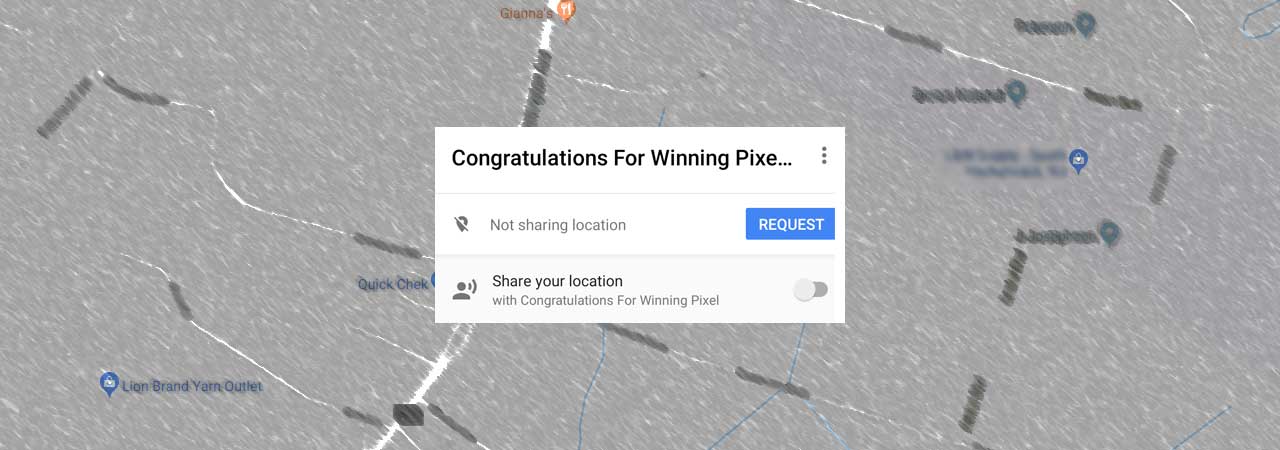
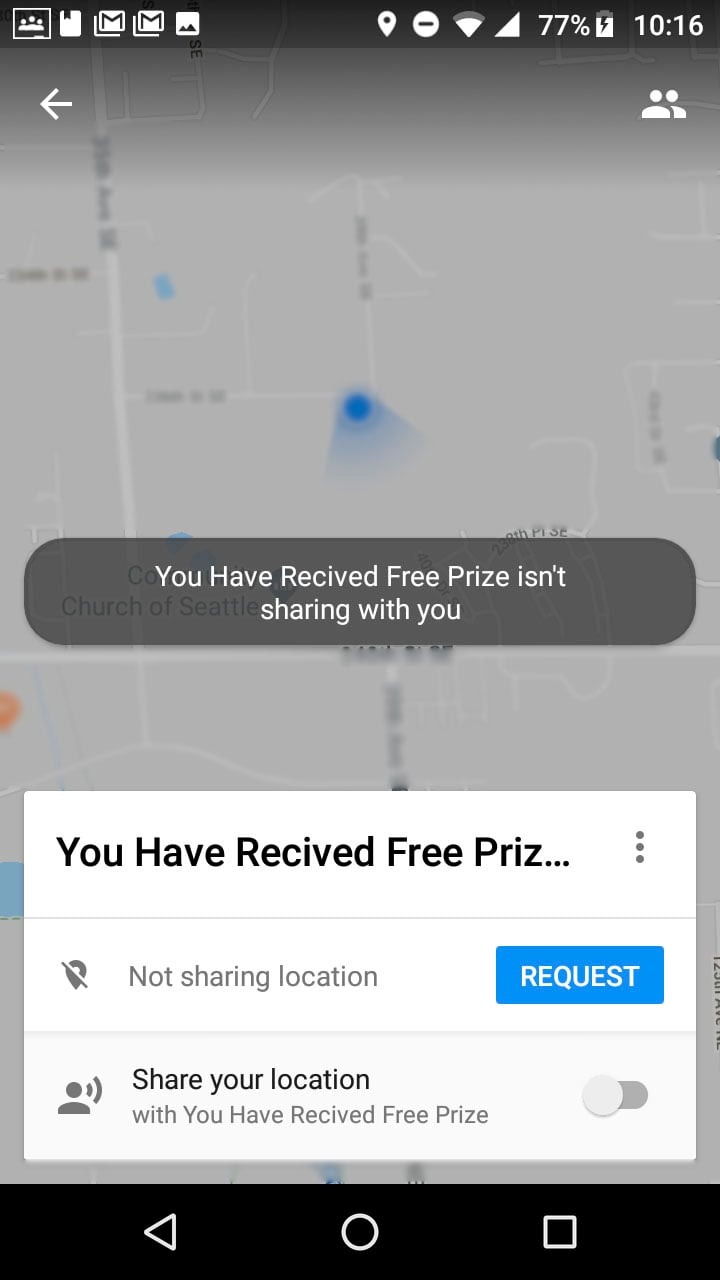
According to reports from numerous users, Android users are receiving Maps push notifications with titles such as "You Have Received a Free Prize from Google", "You Have Received a Free Prize",  "Congratulations for Winning Pixel", and more.  When users click on these notifications, they are then being asked to share their location.
For example, a Reddit post stated:
"Strange thing. Just got a push notif from my Maps app that read "You Have Received a Free Prize from Google [...]", so I figured it was some sort of Google-Play-Rewards-type thing — but once I clicked on it it appeared to be about a user named "You Have Received a Free Prize", with Maps giving me the option to share my location with them. I found the block button and that was that, but has anyone else been subject to this? What's the endgame if a gullible user decides to follow through?"

Maps Notification Spam
Most users who BleepingComputer spoke to regarding these notifications simply block them.
Some, though, have stated that they thought it was an ad from a nearby shop, so shared their location, but did not receive any other information after doing so. As you can imagine, this is confusing as it is not known what the location sharing is being used for.
There has been a lot of speculation as to where these notifications are coming from. Some think that criminals are using this to check when your not home in order to rob you, others that it's part of the Nearby service, or could be a way to advertise a store's products or other promotion. 
For now, if you receive a Maps push notification asking you to share your location, just block it as you never know who you are sending your location to and for what reason.
You have some theories about this Maps spam? Let us know.
Update: Shortly after posting the article, we were told that iOS users of Google Maps have also received these notifications.

Company Pretends to Decrypt Ransomware But Just Pays Ransom

Company Pretends to Decrypt Ransomware But Just Pays Ransom


  • December 5, 2018
  •  
  • 12:28 PM
  •  
  • 1

Ransomware is a serious threat but also a lucrative business for crooks and scammers posing as IT professionals promising successful decryption services for the right price.
Security researchers have found a company in Russia that guarantees decryption of files touched by the Dharma/Crisis ransomware strain, an operation known to be successful only by paying for the unlock key from the malware maker.

Huge markup added

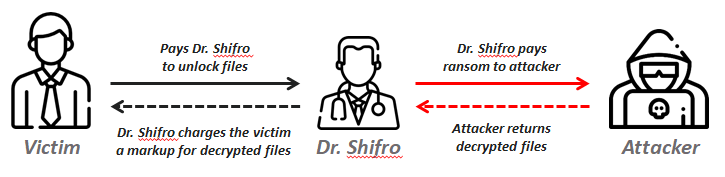
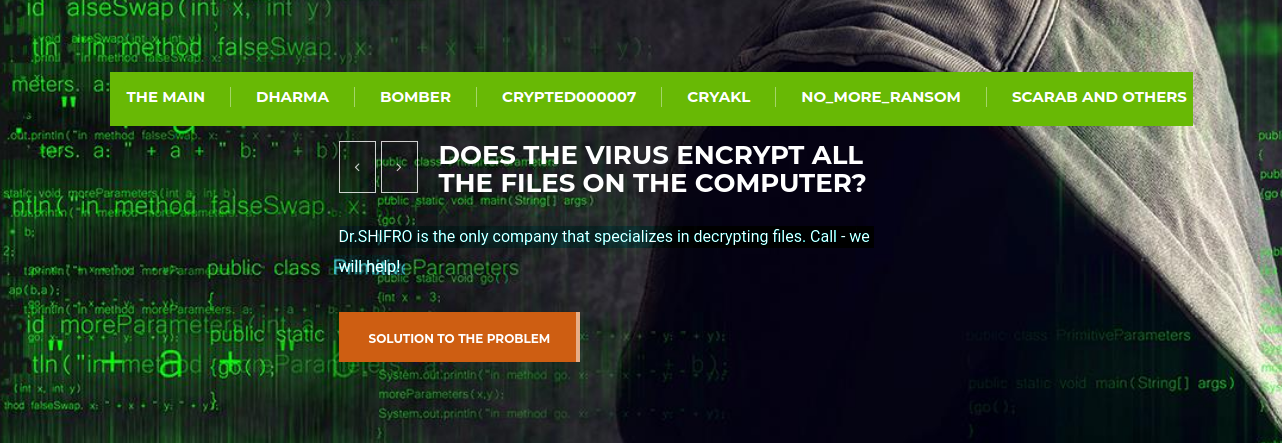
The intriguing claim comes from a company called Dr. Shifro that pretends to be an IT consultancy firm. Its line of business, though, it brokering the file decryption for a hefty bill for the victim and a discount negotiated with the cybercriminals.
Check Point says that Dr. Shifro intermediates these deals since 2015 and has added to its account at least 100 BTC from 300 "contracts." The company advertises decryption services for multiple ransomware variants, including Cryakl, Scarab, Bomber, and Dharma.
An undercover investigation from Check Point revealed that the faux consultant contacts the ransomware creator and asks for a discounted price for the decryption key, which in the case of the researchers was $1,300.
The cost of the unlock key would be incurred by the victim, along with a fee of $1,000 for delivering a decryption tool.
An email to the threat actor makes clear Dr. Shifro's business model:
"I’m an intermediary. We redeem keys for clients since 2015 on a regular basis. Send bitcoins tight, don’t ask dumb questions. Clients frequently addressed under recommendation. Could you give a discount to 0.15 btc?"
The researchers say that the revenue from this type of activity rises to at least $300,000, calculated at an average BTC price of $3,000 recorded during their investigation. However, it is unclear if all victims were billed the same.
The general recommendation is not to pay the ransom in order to make the ransomware business unprofitable. So turning to a company that can decrypt files is a way to get the data back without endorsing criminal activity.Ransomware victims should be aware that a legitimate company offering file decryption services does not make bold claims regarding the success of their efforts because there is a good chance of failure, especially with data locked by strong encryption. Only the availability of the decryption keys can give the confidence of recovery.
Data recovery companies are nothing new on the ransomware scene. Coveware, a company that handles ransomware incidents, is upfront about its business, but many of them hide the fact that all they do is negotiate with the malware developer to get an unlock key.
This activity is not without restrictions, though, and these companies should be more careful about who they negotiate with. At the end of November, the U.S. Department of the Treasury’s Office of Foreign Assets Control (OFAC) imposed sanctions for two Iran-based individuals associated with SamSam ransomware, banning any business with them. This means that transactions to their cryptocurrency wallets are in violation with the imposed sanctions.

Adobe Fixes Zero-Day Flash Player Vulnerability Used in APT Attack on Russia

Adobe Fixes Zero-Day Flash Player Vulnerability Used in APT Attack on Russia

 
  • December 5, 2018
  •  
  • 11:11 AM
  •  
  • 0

Flash
Adobe has released an update for Flash Player that fixes a zero-day user after free vulnerability that was used as part of an APT attack against Russia. This attack is being named "Operation Poison Needles" and targeted the Russian FSBI "Polyclinic #2" medical clinic.
According to research from Qihoo's 360 Advanced Threat Response Team and Gigamon, on November 29, 2018 an attack was detected against Russia's FSBI "Polyclinic #2" clinic. The site for this clinic indicates it provides medical and cosmetic services to the executive and higher level employees of the Russian Federation.
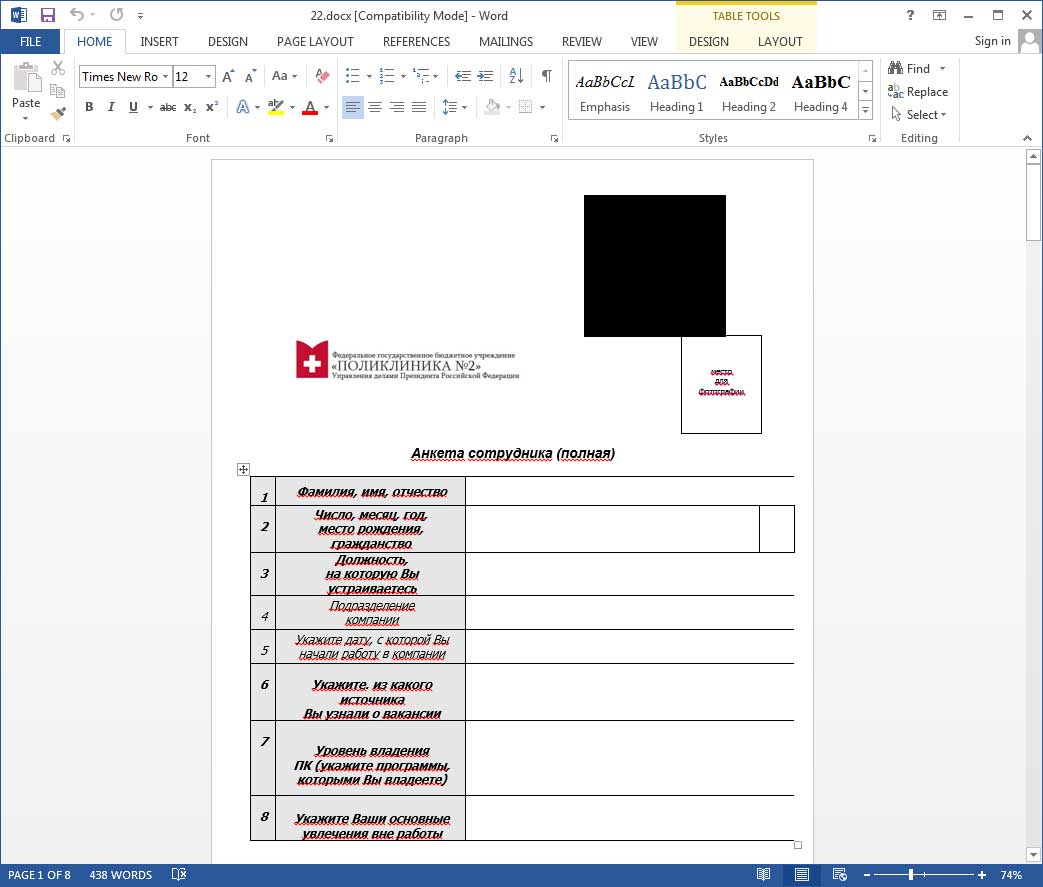
The targeted attack came in the form of a fake employee questionnaire that when opened triggered an exploit for the zero-day Flash vulnerability. This questionnaire is shown below and you can see the Flash object is displayed as a black square in the document.
Malicious Word document pretending to be a questionnaire
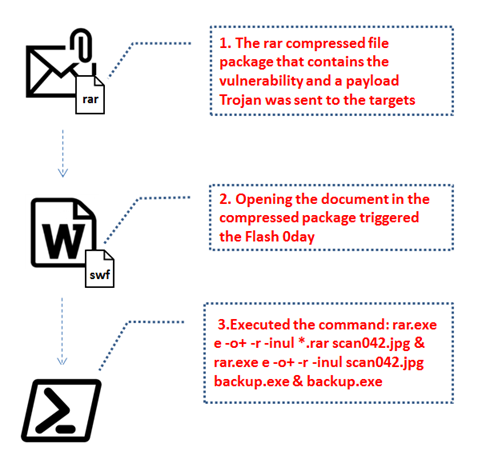
When the exploit is triggered, Word will display a warning stating "The embedded content contained in this document may be harmful to your computer.' and if a user agrees to continue, the following command is executed to extract a rar file and start the backup.exe executable contained within it.
According to Gigamon, the executed command is:
C:\WINDOWS\system32\cmd.exe /c set path=%ProgramFiles(x86)%\WinRAR;C:\Program Files\WinRAR; && cd /d %~dp0 & rar.exe e -o+ -r -inul*.rarscan042.jpg & rar.exe e -o+ -r -inulscan042.jpg backup.exe & backup.exe
This attack flow is illustrated in the image below.
Attack Flow
Attack Flow (Source: 360 Advanced Threat Response Team)
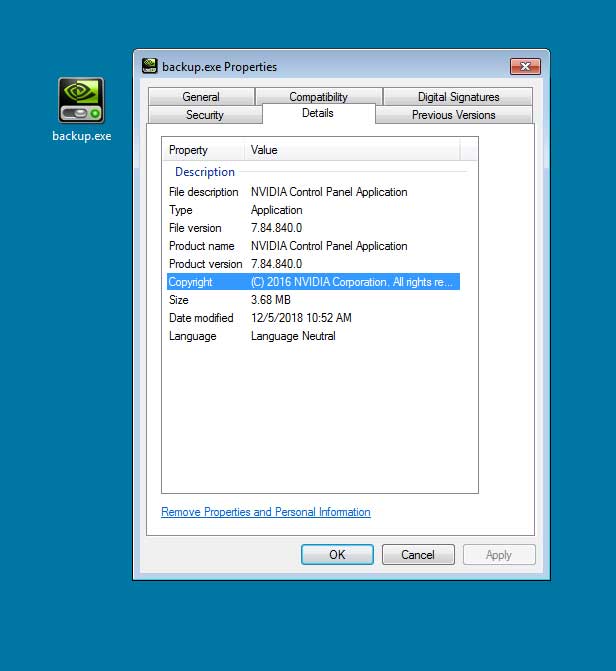
The backup.exe file is backdoor that pretends to be the Nvidia Control Panel application and uses a stolen certificate from "IKB SERVICE UK LTD", which has since been revoked.
The researchers state that when the backup.exe program is executed it will copy itself to %LocalAppData%\NVIDIAControlPanel\NVIDIAControlPanel.exe and send information about the computer and installed applications to a remote host. It will also download and execute shell code on the computer.
Backup.exe backdoor disguised as a Nvidia Control Panel
The researchers feel that this attack is politically motivated as it occurred right after the Kerch Strait Incident when the Russian coast guard boats fired upon and captured three Ukrainian Navy vessels.
"Since it is the first detection of this APT attack by 360 Security on a global scale, we code-named it as “Operation Poison Needles”, considering that the target was a medical institution," the 360 Core Security team stated in their report. "Currently, the attribution of the attacker is still under investigation. However, the special background of the polyclinic and the sensitiveness of the group it served both indicate the attack is highly targeted. Simultaneously, the attack occurred at a very sensitive timing of the Kerch Strait Incident, so it also aroused the assumption on the political attribution of the attack."

Adobe releases update for Flash Player

Adobe has issued security bulletin APSB18-42 that states that Flash Player 31.0.0.153 and earlier are affected by this vulnerability, which has been assigned the CVE-2018-15982 ID. To resolve this vulnerability, users should update to version 32.0.0.101 immediately.
This update also resolves DLL hijacking vulnerability in the program that would allow a bad actor to load a malicious DLL when Flash Player starts.
To be truly safe, it is recommended that all users uninstall Flash Player unless they absolutely need it for an internal application. Adobe plans on retiring flash in 2020 and most sites that have utilized it in the past have moved to other technologies.

Related Articles:

Apple Fixes Passcode Bypass, RCE Vulnerabilities, and More in Today's Updates.

Apple Fixes Passcode Bypass, RCE Vulnerabilities, and More in Today's Updates.

 
  • December 5, 2018
  •  
  • 05:23 PM
  •  
  • 0
Apple Medicine
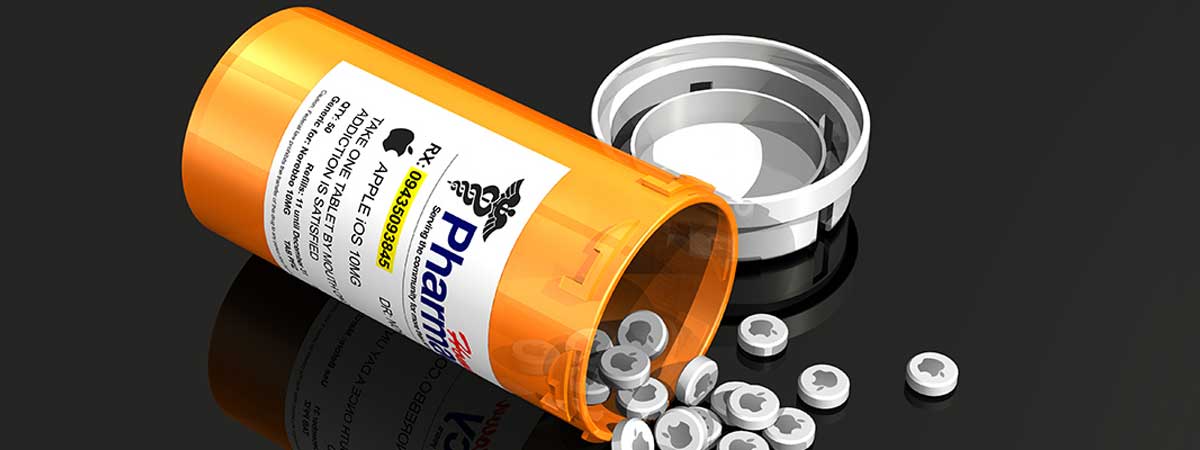
Today Apple released updates for their core products that includes iCloud, Safari, iTunes, macOS Mojave, High Sierra, Sierra, Shortcuts for iOS 2.1.2, tvOS 12.1.1, and of course iOS 12.1.1.
Included in these security updates are numerous code execution, privilege escalations, and information disclosure vulnerabilities. Due to this, if you are the user of any of the above products, you should update them as soon as possible.

iOS 12.1.1 fixes FaceTime locked screen contacts disclosure

iOS 12.1.1 fixes a bug that was discovered at the end of October, the day after iOS 12.1 was released, that allows a user to access a phone's contacts even when iOS was locked.  This bug was discovered by security researcher Jose Rodriguez who has a knack for finding these types of bypasses and demonstrates them on YouTube.
Other vulnerabilities that were fixed include remote code execution, information disclosure, escalation of privileges, and denial of service attacks.

Shortcuts for iOS gets its first security update!

Shortcuts is a new feature added to iOS 12 that allows you to create shortcuts that execute multiple commands with one voice command or tap.
This update is Shortcuts for iOS' first one and sadly there is not much to indicate what was fixed if anything.  Instead we are greeted with the following statement:
"This update has no published CVE entries. We would like to acknowledge Micah A for their assistance."
Whoever Micah A is, congrats!
Below are the rest of the Apple security updates released today.
Name and information link
Available for
Release date
iCloud for Windows 7.9Windows 7 and later05 Dec 2018
Safari 12.0.2macOS Sierra 10.12.6, macOS High Sierra 10.13.6, and macOS Mojave 10.14.105 Dec 2018
iTunes 12.9.2 for WindowsWindows 7 and later05 Dec 2018
macOS Mojave 10.14.2, Security Update 2018-003 High Sierra, Security Update 2018-006 SierramacOS Sierra 10.12.6, macOS High Sierra 10.13.6, and macOS Mojave 10.14.105 Dec 2018
Shortcuts 2.1.2 for iOSiOS 12.0 and later05 Dec 2018
tvOS 12.1.1Apple TV 4K and Apple TV (4th generation)05 Dec 2018
iOS 12.1.1iPhone 5s and later, iPad Air and later, and iPod touch 6th generation05 Dec 2018

Related Articles:

  •  
  •  
  •  
 
  •  
LAWRENCE ABRAMS  
Lawrence Abrams is the creator and owner of BleepingComputer.com. Lawrence's area of expertise includes malware removal and computer forensics. Lawrence Abrams is a co-author of the Winternals Defragmentation, Recovery, and Administration Field Guide and the technical editor for Rootkits for Dummies.

Post a CommentCommunity Rules
You need to login in order to post a comment
Not a member yet? Register Now