This is default featured slide 1 title

Go to Blogger edit html and find these sentences.Now replace these sentences with your own descriptions.This theme is Bloggerized by Lasantha Bandara - Premiumbloggertemplates.com.

This is default featured slide 2 title

Go to Blogger edit html and find these sentences.Now replace these sentences with your own descriptions.This theme is Bloggerized by Lasantha Bandara - Premiumbloggertemplates.com.

This is default featured slide 3 title

Go to Blogger edit html and find these sentences.Now replace these sentences with your own descriptions.This theme is Bloggerized by Lasantha Bandara - Premiumbloggertemplates.com.

This is default featured slide 4 title

Go to Blogger edit html and find these sentences.Now replace these sentences with your own descriptions.This theme is Bloggerized by Lasantha Bandara - Premiumbloggertemplates.com.

This is default featured slide 5 title

Go to Blogger edit html and find these sentences.Now replace these sentences with your own descriptions.This theme is Bloggerized by Lasantha Bandara - Premiumbloggertemplates.com.

Wednesday, January 9, 2019

Moroccan Jewish Community Celebrates Hiloula in Morocco’s Taroudant

Moroccan Jewish Community Celebrates Hiloula in Morocco's Taroudant

הקהילה היהודית המרוקאית חוגגת את חולולה במטרודנט של מרוקו

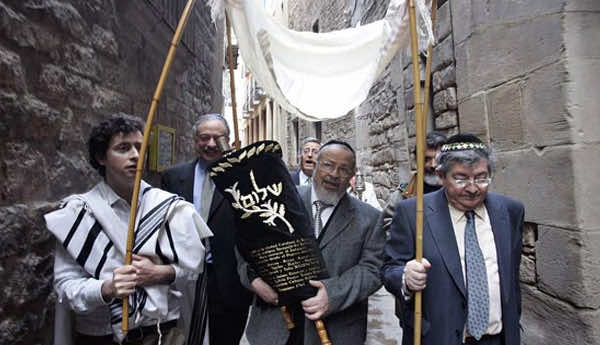
Rabat – Like every year, hundreds of Jewish people from all over Morocco and the globe met Sunday, December 9, at the Rabbi David Ben Baroukh mausoleum in the Tinzert region in Taroudant, 80 kilometers east of Agadir, southern Morocco.
Hiloula is a religious event celebrated by the Moroccan Jewish community. The main purpose of Hiloula is to pray for a good life and the resolution of problems. The Jewish community lights candles, touches the memorial stone, and prays at the tomb of the saint.
Pilgrims raise money for the caretakers of the saint’s tomb by auctioning off large candles and other memorabilia to the highest bidder.
During a ceremony attended by the Souss-Massa region governor, Ahmed Hajji; the governor of Taroudant province, Lahoucine Amzal; and other civil and military officials; the Jewish community seized the opportunity to publicly proclaim and reiterate their strong attachment to their Moroccan origins and their loyalty to the Alaouite dynasty.
Hundreds of Jewish people from around the world, including those of France, England, the US, Tunisia, Iraq, and Venezuela flock every year to Taroudant for the events of Hiloula.

Moroccan Cities Where Jewish Culture Flourishes

catch the traces of Morocco’s once-vibrant Jewish life in glimpses. The stray Stars of David etched above doorways in the coastal city of Essaouira. A gilded Seder plate peeking through an antique shop’s window in Fez’s mazelike medina. Steps away from the sensory overload of snake charmers, fragrant spices and heckling salesmen in Marrakech’s souk lies the entrance to the Jewish quarter, or mellah. And although the city’s estimated 250 Jews (most of whom are older than 60) no longer inhabit what’s left of the neighborhood, a local Muslim child with an outstretched hand will wish you “Shabbat shalom” and lead you to the quarter’s centuries-old synagogue.

CASABLANCA

Not only is Casablanca home to the vast majority of Morocco’s Jewish population, it’s also home to the only Jewish museum in the Arab world. Once serving as a Jewish orphanage, the Museum of Moroccan Judaism details Jews’ 2,000-year history there alongside Moroccan Jewish art, ornate clothing, religious relics and artifacts, a photo and video library, and rooms with partial reproductions of synagogues. But you hardly have to settle for reproductions when you can stand beneath the stained-glass windows, sparkling chandeliers and intricately carved ceiling of Temple Beth-El, one of the city’s many active synagogues. Casablanca also boasts Jewish day schools (some of which are also attended by Muslim children), community centers, and kosher butchers and restaurants.

6 Moroccan Cities Where Jewish Culture Flourishes by the Forward
Jews have been living in Morocco since the time of Antiquity. Prior to World War II, the Jewish population of Morocco reached 225,000. Morrocco's King Mohammed V met with representatives from Nazi Germany and Vichy France during the Holocaust to discuss the issue of Jews in Morrocco.  The Morroccan King famously stated at the meeting that in his country, there are no Jewish citizens, there are no Muslims citizens, they are all Moroccans. The Jews of Morrocco were not sent away to concentration camps, and were not subject to the full brunt of Nazi evil.  Although Jews were not deported during the war, they did suffer humiliation under the Vichy government. Following the U.S. landing in 1943, a few pogroms did occur. In June 1948, bloody riots in Oujda and Djerada killed 44 Jews and wounded scores more. That same year, an unofficial economic boycott was instigated against Moroccan Jews.
In 1956, Morocco declared its independence, and Jewish immigration to Israel was suspended. In 1963, emigration resumed, allowing more than 100,000 Moroccan Jews to reach Israel.2
In 1965, Moroccan writer Said Ghallab described the attitude of his fellow Muslims toward their Jewish neighbors:
The worst insult that a Moroccan could possibly offer was to treat someone as a Jew....My childhood friends have remained anti-Jewish. They hide their virulent anti-Semitism by contending that the State of Israel was the creature of Western imperialism....A whole Hitlerite myth is being cultivated among the populace. The massacres of the Jews by Hitler are exalted ecstatically. It is even credited that Hitler is not dead, but alive and well, and his arrival is awaited to deliver the Arabs from Israel.3
Nonetheless, before his death in 1999, King Hassan tried to protect the Jewish population, and at present Morocco has one of the most tolerant environments for Jews in the Arab world. Moroccan Jewish emigres, even those with Israeli citizenship, freely visit friends and relatives in Morocco. Moroccan Jews have held leading positions in the business community and government. The major Jewish organization representing the community is the Conseil des Communautes Israelites in Casablanca. Its functions include external relations, general communal affairs, communal heritage, finance, maintenance of holy places, youth activities, and cultural and religious life.4
"The Jews no longer reside in the traditional Jewish mellahs, but intermarriage is almost unknown. The community has always been religious and tolerant....The younger generation prefers to continue its higher education abroad and tends not to return to Morocco. Thus the community is in a process of aging."5
In early 2004, Marrakesh had a small population of about 260 people, most over the age of 60. Casablanca has the largest community, about 3,000 people. There are synagogues, mikvaot, old-age homes, and kosher restaurants in CasablancaFez, Marrakesh, Mogador, Rabat, Tetuan and Tangier. In 1992, most Jewish schools were closed, but Casablanca has experienced a bit of a renewal and now 10 schools serve 800 students there.5a
"The Jewish community developed a fascinating tradition of rituals and pilgrimages to the tombs of holy sages. There are 13 such famous sites, centuries old, well kept by Muslims. Every year on special dates, crowds of Moroccan Jews from around the world, including Israel, throng to these graves. A unique Moroccan festival, the Mimunah, is celebrated in Morocco and in Israel."6
Morocco is perhaps Israel's closest friend in the Arab world. King Hassan often tried to be a behind-the-scenes catalyst in the Arab-Israeli peace process. In July 1986, he hosted Israeli Prime Minister Shimon Peres in an effort to stimulate progress. Two months later, Hassan met with a delegation of Jews of Moroccan origin, including an Israeli Knesset member. In 1993, after signing the agreement with the PLO, Prime Minister Yitzhak Rabin paid a formal visit to Morocco.
In May 1999, King Hassan organized the first meeting of the World Union of Moroccan Jews, in Marrakech.
In April and May 2000, the Moroccan government sponsored a series of events and lectures promoting respect among religions.7 Andre Azoulay, royal counselor and a leading Jewish citizen, spoke about the need for interfaith respect and dialogue. In October 2000, two Moroccan youths tried to vandalize a Tangiers synagogue. King Mohamed VI publicly declared in a televised speech on November 6, 2000, that the government would not tolerate mistreatment of Morocco’s Jews. The youths were subsequently sentenced to one year in prison.8
On May 16, 2003, a series of suicide bombers attacked four Jewish targets in Casablanca, and a fifth attack was made against the Spanish consulate. No Jews were hurt in the attack because it occurred on Shabbat when the buildings were empty of Jews. Twenty-nine Muslims were killed. Though the bombings affected the Jewish sense of security, they were viewed by most Moroccans as assaults on the country's social and political order, and a test of the young king's power, rather than an act of anti-Semitism. King Mohammed VI visited the site of one of the attacks the day it occurred and urged the Jewish community to rebuild. The government subsequently organized a large rally in the streets of Casablanca to demonstrate support for the Jewish community and the king reasserted his family's traditional protection for the country's Jews.9

HOW TO CELEBRATE A MOROCCAN MIMUNA AFTER PASSOVER

     כיצד לחקות מורמוקה מימונה אחרי פס

After a full week of eating matza and lots of potatoes, the end of Pesach really feels like freedom as we anxiously await the Mimuna celebration.
Mimuna is the last night of Pesach. In my Moroccan family, we patiently count the minutes for my father to come back from shul, make havdala, and then my mother takes out from the closet her precious cast iron pan where she has been making Mufletas for years. This pan was given to her from my grandmother when she got married almost 40 years ago.
Making Mufletas at the Mimuna is a very important Moroccan tradition. They can be either eaten plain or with honey and butter.

Mimuna
Atop the table we set up all sorts of Moroccan pastries and a large plate with flour, two raw eggs in their shell, raw fava beans and some fresh herbs. This specially arranged plate symbolizes the end of the holiday.
Moroccan Jews celebrate Mimuna after the holiday of Pesach to enhance togetherness since during the holiday we limit our meals to our own house and do not eat at other houses.
Mufletas (see recipe below) are traditionally served with Moroccan mint tea.
MOROCCAN MUFLETA

Mufleta

For Moroccan Jews, a party after Passover עבור יהודי מרוקו, מסיבה אחרי פסח

A Mimouna spread with cookies, marzipan sweets, and a bowl of kumquat slices.

After eight days of observing Passover, most Jews happily put down their matzo and reach for the leavened breads, pasta, cookies, and other foods that had been forbidden during the holiday, which begins at sundown on April 14. A smaller group, primarily those of Moroccan-Israeli descent, will begin the celebration of Mimouna. They, too, will begin to eat hametz (leavened foods), but they make a party of it, with food, music, dancing, and sometimes even costumes.
Not well known in this country, Mimouna celebrates the end of Passover and the beginning of spring. Traditionally, Jewish families in Morocco gave or sold their leavened foods to their Muslim neighbors for the duration of the holiday. When Passover ended, they invited their neighbors into their homes for a feast. Moroccan Jews who immigrated to Israel in the state’s early days brought the celebration with them, and it has grown. Today Mimouna is a national holiday in Israel with big family or public outdoor parties that begin at sundown and often last into the next day. Frequently, politicians attend the celebrations, and it is a badge of honor to have a member of the Knesset, or local elected official, at your celebration.
In 2010, Boston’s New Center for Arts and Culture, a Jewish organization, working with the American Islamic Congress, brought Mimouna to this city. Eva Heinstein, a Jamaica Plain resident who worked at the New Center at the time, was instrumental in launching the interfaith celebration. The daughter of a Moroccan-Israeli mother and an Ashkenazi Jewish father, Heinstein grew up in California and celebrated the holiday with family and friends. “We thought it would be a great idea to bring women from Jewish and non-Jewish communities together, exploring the shared cultures of women who live in Arab lands,” says Heinstein.
“During Pesach, people don’t eat at each other’s homes,” explains Liora Kushner of Chestnut Hill, who runs Liora’s Catering. “Right after, [they] start to welcome others in. It’s an open house. Neighbors just walk in.” When she was growing up in Israel, cooking was her Moroccan-born mother’s domain. A former attorney who stopped practicing law when the youngest of her three children was born (her daughter is now 6), Kushner began cooking here because she missed the foods from home.


Top Places to Visit in Israel מקומות מובילים בארץ


מקומות מובילים בארץ


2

Israel is an incredibly fascinating place. Stories about Israel go back thousands of years, and it’s wonderful to contemplate how many people through the centuries have walked Israel’s shores and roads. Of course, it’s unnecessary to walk everywhere in Israel. Book an car rental in Israel and visit as much of Israel as you possible can.

Start in Haifa in the north and Eilat in the south for art, sports, science, history, and religious activities. No one gets bored in Israel.*

Haifa and Galilee

People from Judeo-Christian cultures enjoy visiting Galilee to see places mentioned in the Old and New Testaments of the Bible. Galilee is the place where Jesus lived and later delivered the powerful Sermon on the Mount. Regardless of religious interest, though, the area is ruggedly beautiful. It’s a perfect place to hike, kayak, or go rafting.
Haifa, located on the Mediterranean, has must-visit, perfectly azure beaches. Here are some favorite beaches to check out:

Bat Galim


Bat Galim is a family-friendly and delightfully historic place. It’s close to Rosh HaCarmel and Galim districts of Haifa. Plenty of free parking, a playground with a giant pirate vessel, and benches everywhere make this beach a perfect place to picnic and people-watch.
The south part of Bat Galim is a favorite spot for surfing and windsurfing, and the rest of the beach is an ideal place to swim. The breakwater near Haifa Bay keeps the waters calm.

Hof Hashaket

Hof Hashaket is situated behind the breakwater of Haifa Bay. The water here is something like a giant just-the-right-temperature saltwater swimming pool. Israelis refer to Hof Hashaket as a serene place.
Visitors should note that men may visit Monday, Wednesday, and Friday while women are allowed to visit Sunday, Tuesday, and Thursday. Men and women may visit the beach together on Saturdays.

Dado Zamir

Dado Zamir is considered one of the most popular spots in Haifa. The promenade runs from the south of Dado Zamir to the north point that touches Carmel Beach.
Some of the best beachy restaurants and bars are located here. Plan to enjoy Israeli folk dancing at Dado Zamir’s arena. And for those who want to use electronic devices at the beach, Dado Zamir has WiFi!

Carmel


Located west of Nave David is Carmel beach. The waters are also calm and many swimmers enjoy a relaxing crawl or backstroke here. Sports facilities, sitting areas, children’s playgrounds, and lots of benches make Carmel a great place to visit alone or with a group.

Kiryat Haim 

Kiryat Haim, located next to the Kiryat Haim suburb in north Haifa, is especially known for its bountiful gardens. A walk on the boardwalk is especially pleasurable—it’s so beautiful.
Plan to enjoy a barbecue if visiting here in the summer months or join the dances. This beach segregates men and women visitors so, if visiting as a male-female couple, arrange the visit on Saturday.
Finally, take a break from the gorgeous sand and visit Ein Hod Artist Village and the amazing Baha’I Gardens.

Tel Aviv


Visit the Carmel Market and take a picnic to Park Hayarkon. This is a wonderful place to go boating, attend a concert, visit the aviary and tropical gardens, hike, or bicycle. At the end of the day, enjoy dinner and theatre at Nalga’at Center. BlackOut Restaurant is an incredible experience. Blind waiters serve delicious food in complete darkness. Actors are also blind and deaf-blind.

Rehovot

Science enthusiasts should visit the Clore Garden at Weizmann Institute. The range of science exhibits includes a solar ignition furnace, a moon walk (simulates the experience of walking in low gravity), and so much more.

Jerusalem


A visit to Israel must include Jerusalem. Plan to stop at the Israel Museum, one of the top repositories for antiquities in the world. Five hundred thousand of the world’s most fascinating objects, such as the Dead Sea Scrolls, are found here. The art of Rodin, Lipschitz, Oldenburg, and Picasso is also here. For those interest in Holocaust history, the Yad Vashem Museum is a life-changing experience. Survivors’ testimonies, artifacts, and a walk through The Hall of Names reveals personal perspectives of the Holocaust.

The Old City 

The Old City of Jerusalem is divided into quarters. Jews, Muslims, Christians, and Armenians live in this city-within-a-city. The Dome of the Rock is located here. According to the holy Koran, Mohammed’s ascension occurred here. The Western Wall, an important Jewish site, is also found here. For millennia, people have placed written messages to God in the wall’s cracks.

Dead Sea

Another must-see spot is the Dead Sea. Plan to visit Ein Gedi Park as well as the Masada. Ein Gedi National Park is a thrilling desert oasis complete with wonderful hiking trails. Goats, desert leopards, and ibex live here. The Masada, located atop a cliff, is a 2,000 year old fortress. One thousand Jewish soldiers fought the Roman army for two years. These brave men chose death rather than slavery, and committed group suicide.

Eilat


Located at the southern tip of Israel and the north of the Red Sea, Eilat is a place to swim, boat, water ski, or swim with wild dolphins. The coral reefs are worth exploring at the underwater observatory or during a scuba dive. The Red Sea Jazz Festival, a local event since 1987, is energizing and a perfect way to spend an August day in Israel.
* Note that some sites are closed for the Sabbath on Friday and Saturday.

המטבח היהודי של צפון אפריקה 5 רעיונות פשוטים The Jewish Cuisine of North Africa 5 Easy Ideas

המטבח היהודי של צפון אפריקה 5 רעיונות פשוטים


The Jewish Cuisine of North Africa 5 Easy Ideas


Image result for jewish recipes


Leftover Chicken Recipes: Moroccan Spinach Pie & 5 More Easy Ideas


here are some things that are a constant on our holiday table, and chicken soup is a given. Too hot outside for soup? My gang doesn’t care. They won’t be satisfied until I ladle shimmering broth over a mound of skinny noodles and carrot coins.
But what to do with all of that leftover moist chicken packed away in a container in the back of your refrigerator?
There are plenty of ways to use these flavorful chunks. You’ve simmered slow and low to keep them moist, so don’t let them go to waste! I’m thinking way beyond chicken salad with mayo and celery here.
Most of these recipes are super simple. A few require a bit more effort. If you want to wow your gang with a Moroccan-inspired chicken pie loaded with spinach and flavors from the Middle East, you’ll find that recipe at the end of the post. It requires phyllo dough, but nobody will guess how easy it was to whip up. Plus, it will fill your home with a whole new array of scents beyond brisket and kugel.

First, these ideas:
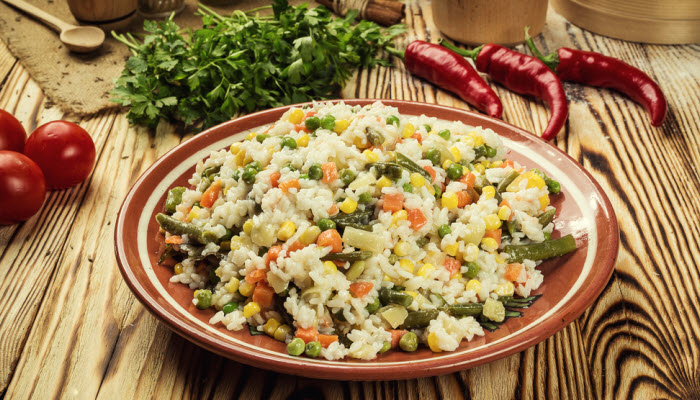
Fried Rice :

With this easy fried rice recipe, Image result for jewish rice

you’ll convert your Jewish leftovers into a Chinese main dish in no time. Want to make it super simple? Make brown rice in advance, purchase pre-packaged chopped greens and use frozen peas and corn as suggested here.


Asian Cabbage and Spinach Salad
Related image

Lime juice, fresh ginger, peanuts, sesame seeds and soy sauce dress this simple Asian cabbage and spinach salad. Toss leftover chicken into the mix and you’ll have a complete meal that doesn’t resemble chicken soup in the least. Note: this recipe calls for fish sauce.


Chicken Salad with Grains and Pistachios :

Image result for Chicken Salad with Grains and Pistachios


This one is not even a recipe, really. It’s just a suggestion to toss leftover chicken over your favorite grain. I like farro, here, as it’s hefty enough to balance chunks of chicken. Before a holiday, I buy a few different fresh herbs to have on hand, even if I’m not sure what I’ll be using them for. Toss the chicken with your favorite homemade vinaigrette, fresh herbs, toasted pistachios or any nut of choice and throw over a platter of cooked grain.


Curry Chicken Soup :
Image result for moroccan jewish recipes

Who said that chicken soup chicken can’t be used in another soup recipe? Use your leftover broth for this one or turn to a good organic brand if your family has already finished every last drop of Jewish penicillin. This Asian-inspired soup is creamy with dairy free coconut milk and loaded with personality thanks to curry powder, onions and garlic and plenty of chopped cabbage. Want it super easy? Use frozen, shelled edamame and pre-sliced cabbage. Toss in cooked chicken just long enough to heat it up.


Sloppy Joes : 

Your kids will love this one. Cider vinegar, tomato sauce, brown sugar and quick reheating transforms leftover chicken into easy Sloppy Chicken Joes. Mound it on a bun and serve with a simple green salad.


Image result for jewish Sloppy Joes
Moroccan Inspired Chicken and Spinach Pie :

Savory meat or chicken-filled pies have a long tradition in Moroccan and Middle Eastern cooking. They are often seasoned with chopped parsley, lots of long-simmered onions, cumin and garlic. Phyllo dough is used to enclose fillings in long “cigars” as appetizers or in triangles as neatly folded fried pockets.

For this recipe, I’m simplifying the process by avoiding frying. My good friend and cooking partner, Melissa Roberts, helped me to overcome my fear of phyllo and the quantity of margarine needed to brush each delicate sheet.
Her trick is to use a combination of margarine and olive oil, keep the sheets covered in the plastic wrap they are packaged in, and don’t fret if they tear. By crumpling a few sheets on the top of the pie before baking, nobody will know if they aren’t perfect rectangles.The crumbling adds pretty texture to this fragrant, savory pie, too.
You’ll find Ras el Hanout spice blend in this recipe. It is a Moroccan-inspired blend that generally includes coriander, turmeric, cardamom, cloves, cinnamon and nutmeg. It is available in most grocery stores.


Ingredients

2 Tbsp pine nuts, lightly toasted in dry pan
5 Tbsp olive oil, divided
2 medium onions, finely chopped
½ teaspoon salt or more to taste
½ teaspoon freshly cracked black pepper
2 cloves garlic, minced
2 tsp Ras el Hanout spice blend
2 cups cooked chicken, light and dark meat combined, chopped
3 Tbsp silan (date honey)
3 tsp lemon juice
10 oz frozen chopped spinach, cooked for 5 minutes, thawed and very well drained.
3 eggs, lightly beaten
3 Tbsp unsalted margarine, melted
12 sheets phyllo dough, thawed
⅛ tsp cinnamon (optional)
Equipment
one 9-inch deep dish pie plate (1.5 inches deep)
pastry brush, large mixing bowl
large non-stick pan


Directions

Preheat oven to 350 F.
In a dry, large, non-stick pan, lightly toast pine nuts until golden and set aside.
Heat 2 Tbsp oil in same pan. Add chopped onions, salt and pepper to pan and cook until onions are golden, about 10 minutes.
Add chopped garlic and Ras el Hanout. Cook 3-4 minutes, but don’t brown the garlic.
Add chicken to pan and stir.
Add silan and lemon juice, stir and taste. It should be pleasantly sweet with a tart tinge. Adjust to taste.
Remove pan from heat and cool the mixture 10-15 minutes on the counter.
In a large mixing bowl, combine the chicken mixture and spinach. Add eggs and pine nuts and combine.
In a small bowl, mix remaining 3 Tbsp of olive oil with melted margarine.

Prepare the pie plate by brushing bottom and sides with olive oil/margarine mixture.
Line pie plate with 8 sheets of phyllo dough, first brushing each sheet with oil/margarine mixture. Stack them in the pan in an overlapping circle and allow edges to hang over the pan.
Spoon chicken/spinach mixture onto layered phyllo dough and fold edges of phyllo over the filling. (It will not cover the filling.)
Brush remaining 4 sheets of dough with oil/margarine mix and crumple each one. Place onto exposed area of filling. Dab crumbled dough and edges with any remaining oil/margarine.
Sprinkle with powdered cinnamon.
Bake 20-25 minutes or until top is golden.
Allow pie to cool for 10-15 minutes before slicing.
Image result for moroccan jewish recipes

The Little-known Cuisine of Spain's Moroccan Jews

המטבח הלא מוכר של יהודי מרוקו הספרדים

Jews of Spanish descent from northern Morocco still adhere to their gastronomic heritage, faithfully preserving a tremendous affection for sweets – including dishes most think of as savory.


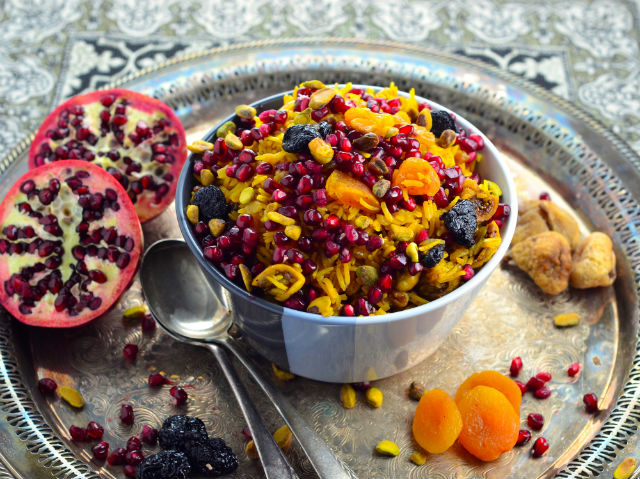
the couscous into a ceramic bowl festooned with an ornamental pattern of castle turrets and flowers. Her husband’s family brought this nearly 200-year-old antique bowl with them when they made aliyah in the early 1960s from Tetouan, Morocco. Around the white grains she arranges, like a string of pearls, chickpeas that have been cooked in a delicate chicken stock without herbs and spices. Then comes the crowning glory – pumpkin, onions, dried plums and almonds that were coated in sugar to absorb their liquid overnight and then cooked in their own syrup. The result, a spectacular feast for the eye and the palate, recalls grand dishes from medieval Spanish and Arabic cookbooks. The white mountain is topped with a wreath of caramelized onions, darkened plums, sugared almonds and a pale red pumpkin marmalade that almost seems to sparkle.
The couscous of the Jews of Tetouan, the main Jewish community in Spanish Morocco, is called couscous con hambriya – from the Arabic hamra (“red”). The Jews of northern Morocco, the area that from 1912 was under Spanish control, are not the only ones who make sweet couscous. Other versions can be found in the cuisines of communities from southern Morocco. But for the Jews of northern Morocco – who came from Tetouan, Tangier, Chaouen and other cities in the area next to the Strait of Gibraltar – couscous is always a sweet dish. “When I came to Israel and saw people were eating savory couscous I almost fainted,”
The name of the dish derives from Haketia, an ancient and nearly extinct language. “Haketia is a special regional Spanish-Jewish dialect that’s a mixture of Spanish, Hebrew and Arabic,” says Dr. Nina Pinto-Abecasis, Rachel’s daughter, who has dedicated herself to preserving the language and researching the daily life of the Jewish communities from Spanish Morocco. “No one can say for sure when this language – which is only spoken and not written – was the main language of the Jews of northern Morocco, but scholars believe it first came into being in Spain prior to the expulsion in the 15th century, and developed further in northern Morocco upon the encounter between the Jews who had lived there from ancient times, the Jews who arrived after the expulsion, and the local population.
“In my parents’ generation, it was considered a low-class language that wasn’t respectable to speak. It can still be found in slang expressions and in certain casual terms for people and things, and I’m trying to trace its remnants and the places where it is still in use. One place where it still takes hold is in culinary terms, in the names of dishes that are still popular among people of the community.”
A dessert paradise


In Israel, Jewish-Spanish-Moroccan culture is not very well known. The immigrants from the Jewish communities of Spanish Morocco were automatically labeled as an inseparable part of the Moroccan aliyah in general, even though back in Morocco they adhered to the Spanish culture and adopted a different lifestyle from the type that was characteristic of the culture of Jews in southern Morocco. In Morocco, the northern Jews were considered insular, and even today – whether because of old customs or the lack of cultural understanding they experienced in Israel – first and second-generation members of the community mostly prefer to stick to their own circle.
“To this day,” says Nina, “all my parents’ friends are people who came from Tetouan and surrounding cities. They call their WhatsApp group “The Tetouans” and the common perception about Jews from this community is that they are very modest and not extroverted at all. For example, when it comes to eating, the Jews from the north adopted the Spanish custom of going out to eat with friends and didn’t have a strong custom of hosting people at home, as is the norm in the south. Southern Moroccan Jews have a folk saying that basically says the northern Jews don’t show a guest proper hospitality at a meal, they just put a candy in his mouth to sweeten the taste. This is emblematic of the difference in hospitality customs, but it also says something about Tetouan cuisine, in which sweetness is very dominant.”
“We suffer from a split personality between Morocco and Spain,” announces Rachel as she continues cooking. After the sweet couscous, which was originally reserved for holidays and special occasions, she makes naranja, a wonderful salad of celery and oranges; ensalada cocha, a cooked pepper salad; and pescado en charmila, a marinated fish very similar to the more familiar southern Moroccan version. Then it’s time for the huevos al nido (“Eggs in the Nest”). All the names are poetic and picturesque, and set the mouth watering even before the finished version appears on the plate.
Speaking of modesty, the lovely, good-natured cook who is hosting us laughingly commands the photographer: “Absolutely no pictures of me!” Rachel goes on to explain: “Every morning I put on makeup, get dressed nicely and feel like the elegant young lady that I am, and then I look in the mirror and can’t comprehend who this older woman is that I see. My brother lives in Venezuela. There’s a large community there that still preserves the Tetouan language and culture, and when we talk on Skype I only let him see the tip of my earlobe, which he knows better than my face at this point. I don’t want my picture taken.”
She shows us how to make pastelitos de patata, meat patties that are coated with mashed potatoes and then fried. We talk about gazpacho and the traditional paella, both common dishes in Tetouan Jewish cuisine. And then at last we arrive at this cuisine’s vast array of desserts.
“This paradise is hard to describe,” says Pinto, recalling the desserts of her childhood. When her family left Tetouan, the city had a population of 80,000 (8,000 Jews, 20,000 Christians and the rest Muslims). At the Alliance school they attended (the first Alliance school opened in Tetouan in 1860), she and her classmates learned to speak Spanish, French, Arabic, Hebrew and English – and she is still fluent in all of them. “All the cakes and desserts were based either on lemon crème, almond crème or vanilla crème. They weren’t heavy desserts based on butter and cream, but light and delicate desserts. Every Saturday night we would go to one of the pastry shops in town and bring home the most incredible desserts.”
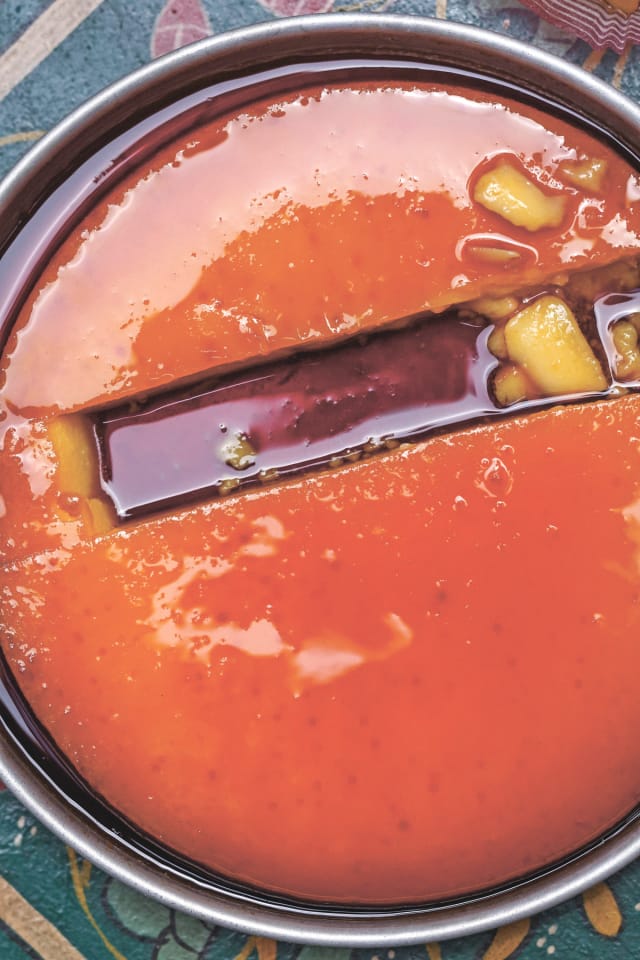
The famous Spanish flan is part of the community’s dessert heritage, as is the tocino del cielo (literally “heavenly bacon” – named for the splendid amber-orange color of the custard). This sweet flan, based on egg yolks and sugar syrup (in the traditional Spanish flan, milk is used), originated in the monasteries of the wine-producing regions of southern Spain as a solution for what to do with the egg yolks (the whites were used to filter the wine). We are also served a coconut flan; merenguitos – merengue clouds; and a wonderful crescent-shaped almond tart that recalls the famous almond cake of Spain’s Galician Jews (not necessarily from the southern Jewish-Moroccan heritage). “The cuisine, like the language, is a mixture of worlds. It would be wonderful if the whole world spoke Haketia,” says Nina, who taught a course last year at Bar-Ilan University’s Salti Center for Ladino Studies and dreams of writing a cookbook about Tetouan cuisine. “It’s a blend of cultures – Jewish, Christian, Arab, Muslim, European and North African – that merge to create a unique harmony.”